DPM marking and reading it in production
DPM marking directly on the part: application methods, reading difficulties (reflection, contrast, curvature), lighting, handheld or fixed scanners, verification and a pilot on your own parts.
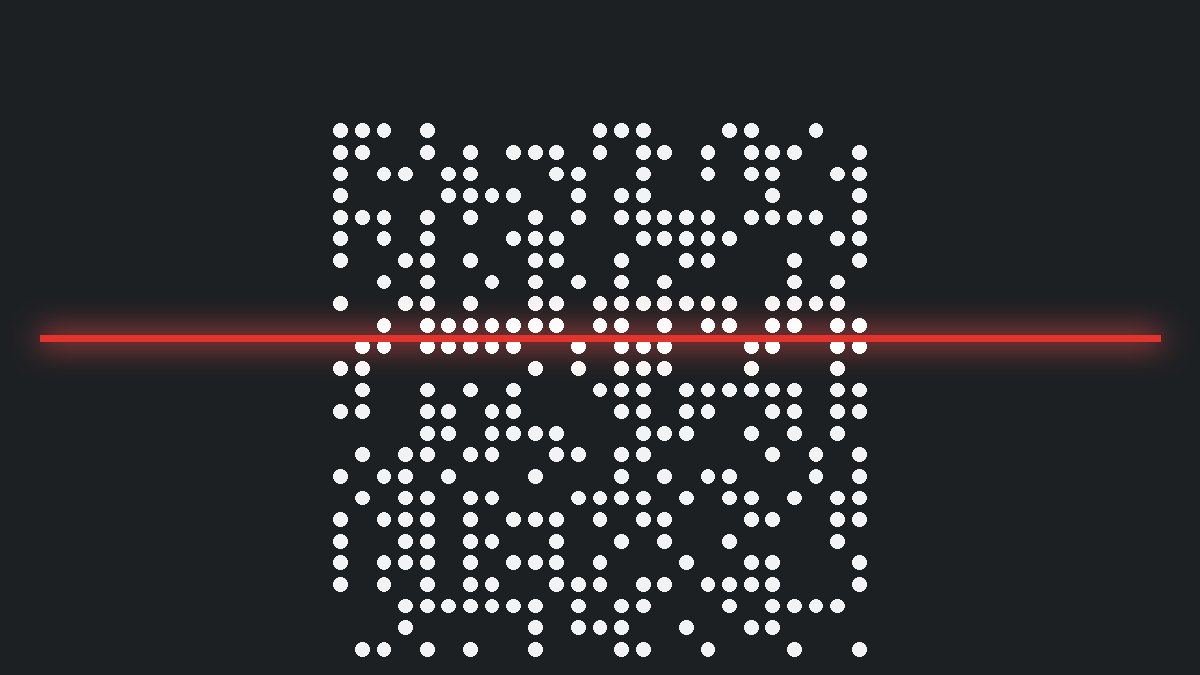
A label cannot always be stuck on a metal part, a plastic housing or an electronic board: it peels off, burns or wears away. Then the code is applied directly to the material. This is DPM (Direct Part Marking), and reading it is more demanding than reading an ordinary label. Below: the marking methods, the difficulties and a pilot plan. Scanners for production are presented in the scanner catalogue and on the production solutions page.
1. What DPM marking is
A DPM code is a 2D barcode, most often DataMatrix, made directly on the surface of the part. It does not depend on adhesive, does not peel off and withstands heat, oils and abrasion better than a label. It is used for automotive parts, aviation, electronics, medical devices and tools. The aim is traceability: you know which part it is, from which batch, on which line and when it was made.
2. How the code is applied
| Method | What the code looks like | What to know when reading |
|---|---|---|
| Laser engraving | Dots or squares engraved or darkened | Variable contrast, depends on material and light angle |
| Dot peen marking | Micro-indentations in metal | Low contrast, shadows, light must come from the side |
| Inkjet | Ink on the surface | Easier to read on smooth surfaces, depends on drying and adhesion |
| Electrochemical | Dark mark from controlled chemical action | Good contrast on some metals, depends on how clean the part is |
The method is usually chosen by the marking specialist, not by whoever reads. But whoever chooses the scanner needs to know what kind of code it will face.
3. Reading difficulties
- Reflection: a shiny metal surface bounces the light back and "blinds" the image
- Low contrast: an engraved or dotted code is the same colour as the part
- Curvature: on a cylinder or a radius the edges of the code are distorted
- Wear and dirt: oil, paint, dust or swarf on the code
- Size: small codes need a scanner that can be brought close to the part, or high resolution
That is why an ordinary label scanner may read paper perfectly and an engraved part not at all.
4. Lighting decides
With DPM, lighting matters as much as the sensor. The usual options:
- Direct light, for matt surfaces or good contrast
- Diffuse light, for shiny and curved surfaces, which reduces reflections
- Low-angle light (dark field), suited to dot peen because it highlights the indentations
DPM scanners usually have several lighting types, switched automatically or in the configuration. Ask whether the specific model is intended for DPM, not merely "industrial".
5. Handheld or fixed scanner
| Criterion | Handheld | Fixed, on the line |
|---|---|---|
| Flexibility | High, one scanner for several stations | Low, the position is set |
| Repeatability | Depends on the operator | Constant, same distance and same light |
| Speed | For small and medium volumes | For continuous flow and automation |
| Mounting | Not required | Needs a bracket, triggering, line integration |
Industrial lines: Datalogic PowerScan (PD9600/PM9600) and Gryphon, Honeywell Granit, Xenon and Vuquest 3310g (fixed), Zebra DS3600 and DS3678. Check in each model's datasheet whether a variant exists specifically for DPM. For cordless work see wireless Bluetooth scanners: range and battery.
6. Code quality verification
A code that "reads today" may not read in a month after wear. A code verifier measures quality against standardised criteria and gives a grade. It is not the same as a scanner: the scanner reads, the verifier evaluates. If you mark and read parts, schedule verification per batch, to catch laser or marking head degradation before rejects appear.
7. Traceability
The code you read must end up in a system: MES, ERP or WMS. Decide in advance what is saved: the part serial number, batch, time, station, operator. If the parts then go to a warehouse, WMS at wms.md links the code to the storage location. For stations with an app on a terminal see terminale-mobile.md. When choosing the code type, the guide 1D or 2D: what to choose in 2026 helps.
Do not rely on photos or specifications. DPM is decided on your real part, with your marking. Two parts of the same material can be marked differently and read differently.
Pilot checklist
- Real parts from several batches, not a single good part
- All methods and materials used in production
- Parts with worn, oily or painted marking
- Scanner in hand and, where relevant, fixed, under the same lighting as on the line
- First-read rate over a sufficient number of parts
- Code quality verification per batch
- Integration test: what reaches the system and how fast
- Delivery times: in stock – shipped the next business day; on order – delivered within one week of payment
- Prices and service
How to proceed
1. Describe the parts: material, marking method, code size. 2. Send us samples or bring them; we pick two or three options from the Honeywell, Datalogic or Zebra lines. 3. Test together on your parts. 4. Decide whether a fixed scanner, a verifier and integration are needed.
For testing on samples and an offer, write to us.